

The EVCI ecosystem: how the key players fit together
Rather than a simple chain of ownership, the EV charging industry is better understood as an ecosystem – one where CPOs sit at the centre, drawing on a range of specialized partners to build and run their networks.
Charge point operators (CPOs)
CPOs own, build and operate EV charging infrastructure. To do so, they employ a variety of software and hardware providers alongside operational service partners. No two CPO stacks look identical, but all depend on the same core functions: managing the physical network, controlling energy flows, handling transactions and keeping stations running in the field.
Charge point management systems (CPMS)
The CPMS is the operational backbone that enables CPOs to run their network. It handles station configuration, session management, remote monitoring, fault detection and communication between chargers and backend systems – the engine room that keeps everything running.
E-mobility service providers (eMSPs)
eMSPs are the access interface between drivers and operators. They handle the customer-facing layer of the charging experience: RFID cards, mobile apps, roaming agreements and driver support. A CPO may operate their own eMSP function or partner with one. Either way, the eMSP is what makes the network usable from a driver's perspective.
Together, these players – alongside energy suppliers, payment platforms, CRM systems and field service partners – form the interconnected ecosystem that underpins every charging session, from grid connection to driver receipt.
What are the roles and responsibilities of charge point operators?

Infrastructure development
CPOs strategically plan and deploy electric vehicle (EV) charging infrastructure, selecting optimal locations based on demand and accessibility. Collaborating with property owners, businesses and municipalities is crucial to secure suitable sites for the development and deployment of EV charging stations.
Hardware installation and maintenance
CPOs oversee the selection and installation of charging hardware, including stations and associated equipment. They conduct regular inspections and maintenance procedures to ensure peak performance, promptly addressing any technical issues that may arise in the charging infrastructure.
Backend management
Charge point operators handle backend management by establishing and maintaining a network that connects charging stations. This enables real-time monitoring, technical issue detection, billing and payment and user authentication through a centralized system. CPOs use this backend infrastructure to ensure efficiency, reliability and seamless operation of the entire electric vehicle charging network.
Network management
CPOs orchestrate network management, constructing an interconnected system of charging stations that communicates seamlessly with a central energy management system. They implement smart charging solutions, which optimize energy distribution and effectively manage peak demand to ensure the efficient operation of the electric vehicle charging network.
Operational monitoring
CPOs also conduct real-time operational monitoring of charging stations, swiftly identifying and addressing issues. They employ remote diagnostics and predictive maintenance strategies, minimizing downtime and ensuring the continual efficiency of the electric vehicle charging infrastructure.
Regulatory compliance
One of CPOs’ core tasks is to ensure compliance to regulations by staying informed about and adhering to local, regional and national regulations that govern EV charging infrastructure. They proactively secure necessary permits and approvals and navigate the regulatory landscape to successfully install and operate charging stations.
User support
User support, often facilitated through eMSPs, is integral for CPOs. This entails delivering responsive customer support, addressing inquiries and assisting with technical issues to ensure a positive charging experience. Educating users on station functionality and promoting best practices is a key tool to enhance overall satisfaction within the EV charging network.
Data management and reporting
Data management – which comprises analyzing charging station usage, energy consumption and user behavior – is one of the important duties of CPOs. Charge point operators produce regular internal reports and share pertinent data with regulatory authorities or partners as needed to facilitate informed decision-making. Real-time data management also optimizes the performance of electric vehicle charging infrastructure.
Marketing and outreach
CPOs also develop marketing initiatives to highlight the accessibility and advantages of their charging network. Through proactive outreach, they attract new users and establish valuable partnerships with stakeholders in the e-mobility ecosystem, fostering the growth and visibility of EV charging infrastructure.
Security and safety
And lastly, charge point operators prioritize security and safety, implement robust measures to protect both the charging stations and user data. Rigorous adherence to safety standards, along with regular inspections, ensures the ongoing compliance to and reliability of the electric vehicle charging network.
What are the challenges CPOs face
While major charge point operators in Europe exhibit notable successes, their journey is not without hurdles. CPOs face bottlenecks that can only be solved through the cooperation of multiple stakeholders.
Grid connection time
Prolonged timelines for establishing grid connection points hinder rapid expansion and responsiveness to increasing demand for electric vehicle (EV) charging infrastructure.
Process complexity
The intricate and bureaucratic processes involved in acquiring permits, approvals and regulatory compliance pose challenges, slowing down the deployment of charging stations.
Limited grid capacity
Access to sufficient grid capacity is a persistent challenge, impacting the ability of
CPOs to meet the growing needs of EV charging networks.
Interoperability issues
Lack of standardized communication protocols and interoperability among different charging networks can create inconveniences for users and hinder seamless cross-network operations.
User education and awareness
Many potential users lack awareness of the benefits and functionality of EV charging infrastructure, requiring significant efforts in education and outreach to encourage adoption.
Capital investment
The substantial upfront capital required for infrastructure deployment, along with ongoing operational costs, poses financial challenges for CPOs, affecting the pace of network expansion.
Regulatory ambiguities
EV charging regulation is constantly evolving, can be ambiguous and differs from country to country. This can create uncertainties, slowing down decision-making and investments in charging infrastructure.
Competition and market saturation
The entrance of more players in the EV charging sector is leading to increased competition and growing market saturation. This makes it more challenging for CPOs to differentiate themselves and maintain profitability in a crowded marketplace.
How gridX's EVCI product bundles address CPO challenges
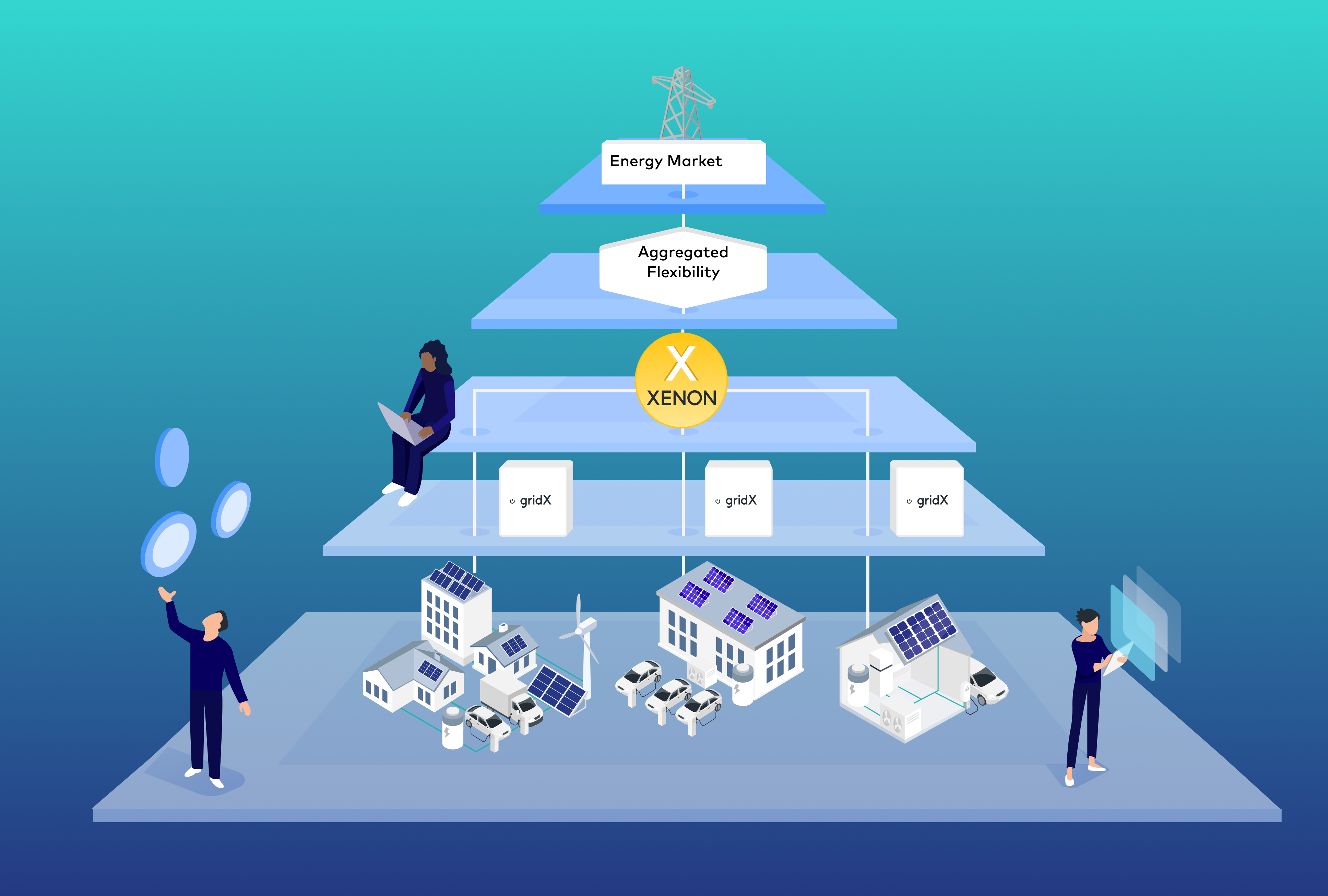
Running a profitable EV charging network demands more than hardware – it requires a coordinated layer of software, operational logic and market intelligence working across every stage of a site's lifecycle and profit and loss (P&L). gridX supplies a critical element of that stack: an energy orchestration platform that manages how power flows, how costs are controlled and how assets generate returns.
From the moment a site goes live, gridX's EVCI platform addresses distinct layers of operational and commercial complexity through three integrated product bundles – each one building on the last.
Standard control
The standard control bundle forms the foundation of any robust EV charging operation. It focuses on protecting physical assets, maintaining grid safety and ensuring baseline charging performance, automatically and at scale.
- Fuse protection: A software-driven safeguard that continuously monitors electrical currents at critical site bottlenecks. When total site demand threatens to exceed safe thresholds, the system automatically throttles charger output before any physical fuse can trip.
- Dynamic load management: Rather than applying fixed power caps, this feature continuously tracks fluctuating building demand and redistributes the remaining available capacity across chargers in real time. The result is maximized charging throughput within hard grid limits – no manual intervention required.
- Peak shaving: Grid operators bill commercial sites based on their highest consumption peak in a billing period. By actively flattening demand spikes – often by deploying on-site battery storage to absorb excess load – this module eliminates costly demand charges. Based on gridX's internal calculations, the savings potential can reach up to €10,000 per year, depending on site characteristics and local tariff structures.
- Regulatory compliance: Enables site operation in line with local grid regulations by applying market-specific control requirements, such as Germany's §14a EnWG, the UK's G100 export limitations and the Netherlands' post-net-metering energy management landscape.
Advanced optimization
Advanced Optimization moves beyond protection and into proactive cost reduction and asset orchestration. Intelligent algorithms work continuously to lower energy bills, maximize local renewable generation and push the boundaries of what a fixed grid connection can deliver.
- Dynamic tariff optimization: In markets with variable hourly or half-hourly electricity pricing, this module automatically schedules high-power charging during the cheapest windows, reducing energy procurement costs without any manual configuration.
- Self-consumption optimization: The EMS monitors real-time output from on-site photovoltaic (PV) systems and routes surplus renewable energy directly into vehicles or stationary storage, rather than exporting it to the macro-grid at low feed-in rates.
- User-based optimization: Power allocation is tailored to individual driver profiles, fleet schedules and dwell times. Vehicles due to depart imminently receive maximum charge rates; longer-stay vehicles are throttled and scheduled for lower-cost energy windows.
- DSO signalling: When local grid stress triggers demand-side response (DSR) instructions from the distribution system operator, the system processes these commands automatically at the gateway level. Site consumption is steered downward to meet compliance requirements without unnecessarily curtailing driver charging sessions.
Flexibility services
At the top tier, flexibility services transform pooled charging and storage assets into active participants in European energy markets. CPOs move from managing costs to generating new revenue streams through grid services and market trading. To give a sense of scale: gridX currently manages over 550 MWh of technically available flexibility capacity and activates more than 40 MWh per day across its European asset pool.
- Optimization and forecasting: Predictive algorithms analyse historical site data, fleet duty cycles, weather patterns and market prices to calculate optimal asset control strategies up to 48 hours in advance.
- Aggregation and disaggregation: Distributed energy resources – EV chargers, stationary batteries and PV systems across multiple sites – are pooled into a single virtual power plant (VPP). This aggregated capacity meets minimum market trading thresholds, while incoming grid signals are disaggregated back down to steer individual assets.
- Multi-asset optimization: The EMS simultaneously coordinates EV chargers,, solar arrays and stationary batteries to maximize total site and network commercials
- Multi-market trading: Value stacking is executed across multiple country-specific wholesale and flexibility markets simultaneously. This includes day-ahead market trading (locking in hourly prices for the following day), intraday trading (exploiting sub-hourly price spreads in volatile markets such as Germany and the Netherlands), imbalance market participation (turning grid supply deficits or surpluses into revenue in markets like the Netherlands) and congestion management (monetising flexible capacity through formal agreements with network operators to relieve localized grid bottlenecks).
By combining these three bundles, CPOs can build a charging operation that is not only resilient and cost-efficient, but one that actively contributes to – and profits from – the broader energy transition.
gridX for charge point operators: frequently asked questions
Is gridX built specifically for EV charging infrastructure, or is it a generic energy management platform?
gridX is purpose-built for the demands of commercial, large-scale EV charging operations. The platform is designed for high-power public and semi-public networks and complex multi-site, multi-country operations, with dedicated capabilities for load management and dynamic tariff logic. Charging is not a feature of gridX – it is the hero use case the platform is built around.
Where does gridX sit in my existing technology stack?
gridX operates as an orchestration and optimization layer that sits between your chargers, batteries and PV, different sites and energy markets regardless of which charger backend or OEM hardware you already use. It is designed to work on top of your existing infrastructure, not replace it. Whether your network runs on specific OEM chargers/batteries/PV, third-party CPMS solutions or existing smart meter platforms, gridX integrates with and enhances them rather than competing with them.
Do I need to replace my current charger hardware or backend systems to use gridX?
No. gridX's broad interoperability with existing charger backends, OEM hardware and smart meter systems means you can add intelligent energy management without a disruptive rip-and-replace migration. CPOs can start with a pilot on a subset of sites and scale progressively across their full network on the same platform, without re-implementation.
We only have a small number of chargers or sites right now. Is gridX still relevant?
Yes. And the economics work from day one. Even single-charger sites and early-stage pilots can be managed efficiently through gridX's standardized deployment templates. The platform scales from one charger to thousands on the same architecture, with no re-platforming as your network grows. Critically, the cost of not orchestrating – unmanaged peaks, foregone dynamic pricing, grid reinforcement expenditure – is often higher than the cost of the platform itself, even at small scale.
How does gridX help CPOs generate revenue, not just manage costs?
gridX shifts energy management from a cost centre to a margin driver. On the cost side, peak shaving, dynamic tariff optimization and grid fee management directly reduce energy procurement and network transport costs – with peak shaving alone delivering savings of up to €10,000 per year per site depending on local conditions. On the revenue side, Flexibility Services enables CPOs to pool their distributed assets into virtual power plants and participate in day-ahead, intraday and imbalance markets, as well as congestion management programmes, turning existing infrastructure into an active income stream.
How does gridX address grid capacity constraints – the biggest bottleneck for CPOs in Europe today?
Grid capacity has become the defining constraint for CPO network expansion across Europe, and gridX's EVCI product bundles address it at every level. Standard Control combines dynamic load management, fuse protection and the Grid Signal Processor to ensure charging sites operate within available grid capacity while automatically responding to grid operator signals and local constraints. Peak shaving further reduces demand charge exposure by limiting costly power peaks. Advanced Optimization's Virtual Grid Expansion (VGE) goes a step further: by integrating on-site battery storage, it makes an existing grid connection behave as though it were larger, enabling more chargers to operate simultaneously without waiting for costly and time-consuming grid upgrades.
Which types of CPOs are benefitting most from gridX?
gridX is designed for CPOs managing hundreds or thousands of charging points across large public and semi-public charging networks. It is particularly well suited to operators expanding across Germany, the Netherlands and the UK, including fleet hubs, destination charging and transit infrastructure. The platform delivers the greatest value for CPOs managing large charger portfolios, where intelligent energy management, centralized operations and flexibility services generate significant operational savings and new revenue opportunities. While smaller networks can also benefit, gridX is built to scale with operators as their charging infrastructure grows.


.svg)

.svg)